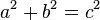
Theorem of Triangle:
If in two triangles, corresponding angles are equal, then their
corresponding sides are in the same ratio (or proportion) and hence the two
triangles are similar.
Theorem of Triangle is explained below to understand it better:
This criterion is referred to as the AAA (Angle–Angle–Angle) criterion of similarity of two triangles. This theorem can be proved by taking two triangles ABC and DEF such that
∠ A = ∠ D, ∠ B = ∠ E and ∠ C = ∠ F (see Fig. 6.24)
 Cut DP = AB and DQ = AC and join PQ.
So, Δ ABC ≅ Δ DPQ (Why ?)
This gives ∠ B = ∠ P = ∠ E and PQ || EF (How?)
Therefore,
( / notation used to represent divided by) *
DP/PE =DQ/QF
AB/DE =AC/DF
Similarly,
AB/DE=BC/EF and also AB/DE=BC/EF=AC/DF
Remark : If two angles of a triangle are respectively equal to two angles of another triangle, then by the angle sum property of a triangle their third angles will also be equal.